
Man vs. Machine: Will Robots Really Replace Construction Workers?
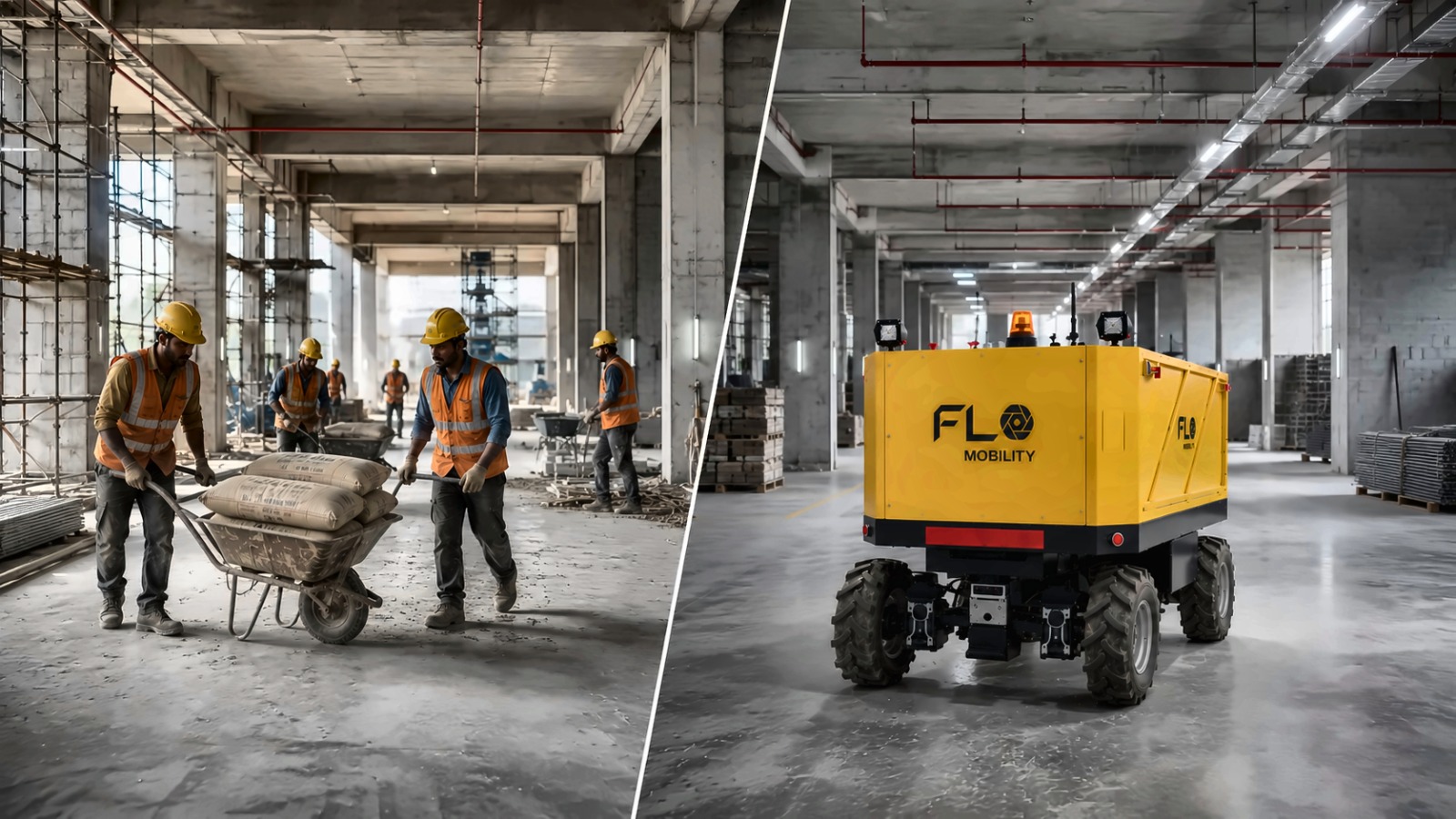
Man vs. Machine: Will Robots Really Replace Construction Workers?
Short answer: No. Robots aren't stealing jobs. They're filling the ones nobody is showing up for.
Picture a construction site in India in 2026. A robot rolls across the site on its own, carrying bricks and cement from the yard to the right floor - no worker pushing a wheelbarrow. Nearby, a printer marks the floor plan straight onto bare concrete in minutes, a job that used to take a crew half a day with tape measures and chalk lines.
It sounds futuristic. In India, it's already happening on real sites, not just in demos.
So the question everyone keeps asking - will robots replace construction workers? - isn't quite the right one. This isn't man versus machine. It's a workforce with a big gap in it, and machines are stepping in to help close that gap.
The Real Problem: India Doesn't Have Enough Skilled Workers
Here's the number that explains everything: India's construction sector already employs over 70 million people - it's the country's second-largest employer after agriculture. And yet, industry experts say the sector needs close to 2 million more trained workers in trades like carpentry, plumbing, and electrical work just to keep up with demand.
The problem isn't a lack of people. India has a young, growing workforce. The real problem is skill and training. Most workers still learn on the job, without formal training, and very few young people are choosing construction as a career. On top of that, many skilled workers have moved abroad for better-paying jobs in the Gulf, leaving sites short-handed.
At the same time, India is building faster than ever - metros, highways, airports, housing, factories. The construction sector is projected to grow from about $1.2 trillion today to over $2 trillion by 2030, adding nearly 8 million new jobs a year. More projects, same shortage of trained hands. That gap is exactly why robots are showing up on Indian job sites faster than anyone expected.
Here's a number that shows just how far behind construction still is: India's automotive plants use over 600 robots for every 10,000 workers. Construction sites use only 15 to 20. That's not because construction can't use robots - it's because nobody had built the right ones for a messy, outdoor, ever-changing job site. That's starting to change.
What's Actually Happening on Indian Sites Right Now
Material movement is going driverless. Robots now carry sand, cement, bricks, and blocks across sites on their own - the trips workers used to make by hand, dozens of times a day. Builders like L&T, Godrej Properties, and Sobha are already using these on live projects.
Layout that took hours now takes minutes. Robotic printers mark full floor plans onto the ground with high accuracy, cutting out a slow, error-prone part of the build process.
Bigger machines are learning to work on their own too. Around the world, driverless trucks and self-adjusting excavators are moving from testing into daily use - and that same technology is starting to reach Indian sites and quarries.
Even the paperwork has help now. AI tools are taking over routine coordination work - reading drawings, tracking approvals, spotting scheduling conflicts, and flagging cost issues. This used to eat up a project manager's entire week.
Underneath all of this is something new: robots are getting better at understanding the physical world -things like uneven ground, changing weather, and how materials behave - instead of just repeating a fixed set of movements. That's a big part of why this feels different from earlier "robots are coming" predictions.
So What Happens to the Workers?
Here's the part people get wrong. Most robots on site today still need a person nearby. They're helpful tools, not full replacements. A robot can carry material all day, but it can't read a messy job site, make judgment calls, or fix problems on the fly.
What's really changing is the job itself. More workers are learning to operate and manage machines instead of doing every task by hand - less carrying, more overseeing. This shift also opens the door to better-paying, less physically exhausting roles: robot operators, site technicians, and other skilled positions that didn't exist on a construction site a few years ago.
Not everyone agrees on how fast this is moving, and that's worth mentioning. Some industry leaders feel India's real challenge is training, not technology - that without enough skilled project managers, engineers, and technicians, even the best machines won't fix everything on their own. That's a fair point. Robots help, but they work best alongside a workforce that's also getting better trained.
Where Flo Mobility Fits In
This is exactly the gap we set out to fix. Flo Mobility is a Bengaluru-based company building autonomous robots for Indian construction sites - starting with the most repetitive job on site: moving material.
Our flagship robot, the Flo Hauler, carries loads across a site on its own, so crews spend less time hauling and more time on skilled work that actually needs a person. It's already running on 70+ sites across India, working with builders like L&T, Godrej Properties, and Sobha - helping cut material movement time by up to 50% and site accidents by 67%.
We're not trying to replace the people on site. We're trying to give them fewer exhausting, repetitive trips and more time for the work that needs real skill and judgment - which is the same idea this whole piece has been about.
The Bottom Line
India isn't losing construction workers to robots. It's short on trained hands at a time when it's building faster than ever, and robots are one of the few things helping close that gap.
The builders doing well right now aren't chasing the flashiest tech. They're pairing their workforce with smarter tools, so projects still get built safely and on time. It's not man vs. machine. It's man and machine, building India's future together.
Curious how automation could fit into your next project? Let's talk.
https://flomobility.com/contact