
Why Commercial Construction is Booming: Automation in Construction Industry India
Why Commercial Construction Is Booming?
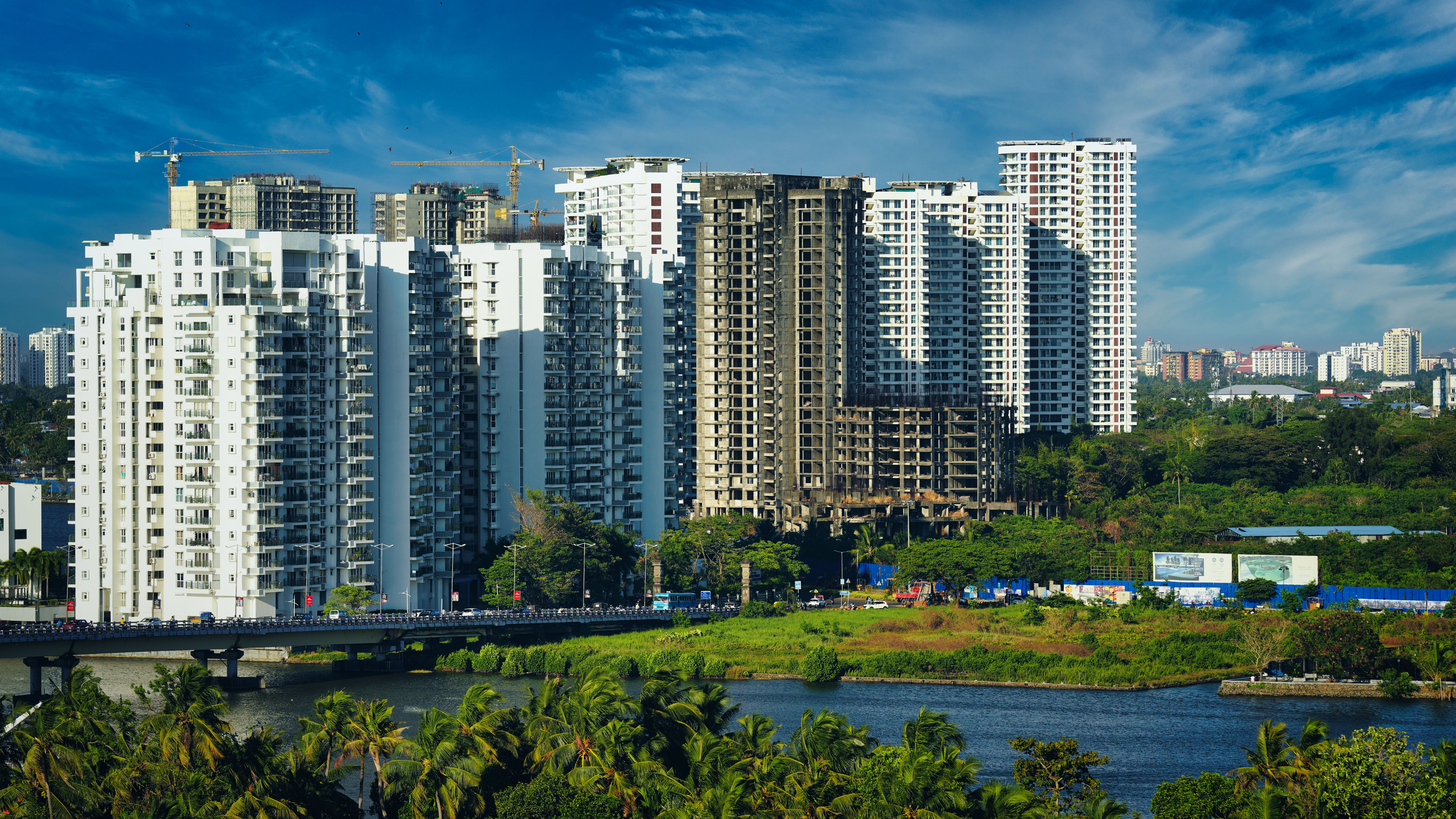
Walk through Mumbai, Hyderabad, or Chennai and you'll see cranes everywhere. That's not a coincidence - India's commercial construction market is projected to grow from USD 181 billion in 2025 to over USD 240 billion by 2030, fueled by government spending, foreign capital, and a data center gold rush.
It's a good time to be in Indian construction. But it's also a demanding one - costs are climbing just as fast as demand, and that's exactly why construction robotics in India is quickly becoming part of how developers keep up.
1. Data Centers Are the New Skyline
If one sector captures this construction cycle, it's data centers. India's data center capacity is set to hit 1.7-2.0 GW by end-2026, backed by nearly USD 30 billion in investment - nearly double the capacity of just a few years ago.
The mega-deals keep coming: Google and AdaniConneX are building a 1 GW, USD 15 billion AI campus in Visakhapatnam - one of Google's largest infrastructure bets outside the US. Adani Group has pledged USD 100 billion toward 5 GW of hyperscale capacity by 2035, and Reliance is reportedly planning a 3 GW facility in Jamnagar.
Why is so much of this landing in India? Data center construction here costs USD 6-7 million per MW -far cheaper than Singapore or Japan - plus long tax holidays and faster single-window clearances. For hyperscalers racing to add AI and cloud capacity, that's hard to ignore.
2. Global Capital Keeps Pouring In
Commercial real estate in India offers something increasingly rare globally: yields of 8-10%. That's pulling in institutional money at a scale the sector hasn't seen before.
FDI grew 15% year-on-year to USD 18.6 billion in Q1 FY 2025-26 alone.
India's four active REITs now hold USD 7.47 billion in assets, with 60% of Grade-A office stock REIT-eligible - a big runway for pension and sovereign wealth funds still entering the market.
The Knowledge Realty Trust listing in August 2025 raised USD 578 million, a sign investor appetite is still building, not slowing down.
Global names - Blackstone, Brookfield, Keppel Land, Hines - continue closing billion-dollar-scale deals across office, industrial, and logistics real estate.
3. A Young Workforce, Meeting an Old Bottleneck
India's construction demand is also a demographic story - a workforce skewing heavily under 35 is driving demand for modern office campuses and flexible workspaces. But that same youthful workforce is proving harder to retain on physical job sites, as urban migration slows and skilled labor gets pulled toward better-paying, less physically demanding sectors.
4. Rising Costs Are Forcing a Labor Shortage Solution
It's not all upside. Build costs hit USD 33.4 per square foot in 2025, up 39% over four years, and labor costs alone rose roughly 25% in the past year. Regulatory clearances - environmental, heritage, utility - can still stretch past 12 months in several states, quietly eroding project returns.
This growing labor shortage in India's construction industry is exactly why automation in construction - BIM, drones, IoT, and robotics - is shifting from a nice-to-have to a necessity, especially for developers trying to reduce construction costs and speed up construction timelines without compromising quality or safety.
How Construction Robotics Is Helping Builders Keep Up
This is where autonomous construction robots are starting to change the math for developers, EPC contractors, and infrastructure companies alike - not by replacing the workforce, but by taking over the slow, repetitive, injury-prone work that no one wants to do manually anymore.
At Flo Mobility, our material movement robots use computer vision to move materials autonomously across a job site - no manual carting, no bottlenecks between supply points and work zones. As a practical form of construction automation for real estate developers, our haulers are already deployed across commercial project sites in India, with real, measured results:
50% faster material transport, by removing bottlenecks between supply points and work zones
50% cost savings on an airport construction project, by cutting manual labor dependency
67% fewer workplace accidents, through construction site safety automation that removes workers from repetitive, high-risk handling tasks
Proven scalability, from high-rise towers to large-scale infrastructure builds
As one of India's largest contractors put it: Flo's haulers cut material movement time in half while cutting costs - freeing up crews for higher-skilled work and directly easing the labor crunch on site.
What This Means If You're Building in India Right Now
The next few years will separate two kinds of developers and contractors: those who absorb rising labor and material costs as an unavoidable tax on growth, and those who treat automation as a lever to protect margins while still hitting aggressive delivery timelines.
Given where labor costs and project delays are headed, the return on a well-placed construction robot on a large site is no longer theoretical - it shows up directly in transport speed, safety incidents, and the bottom line.
The Bottom Line
India's construction boom isn't slowing down anytime soon — but rising costs mean the winners won't just be the ones building the most. They'll be the ones building fastest, safest, and leanest.
Curious what construction robotics could do for your site? Connect with Flo Mobility to see how automation can boost speed, safety, and ROI on your next project. https://flomobility.com/contact