
Construction Cost Trends India 2026: Why Labour Inflation Is Driving the Spike
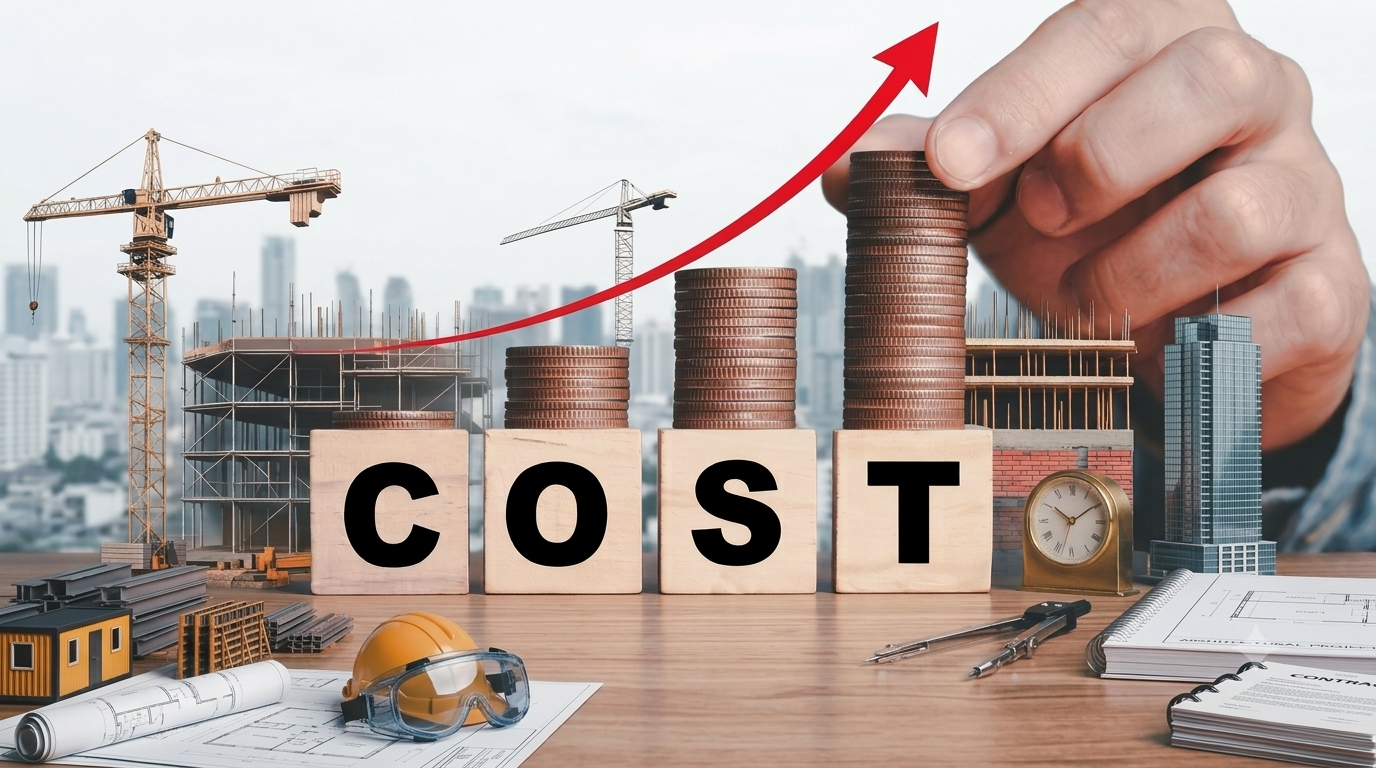
If you work in construction, you already know that your projects cost more this year than last year. Again.
In 2024, construction costs in Indian real estate rose by up to 11% from the previous year, according to Colliers India. Now, industry data for 2026 shows that this pressure hasn't eased. It's just changed. Material prices have actually declined in some areas. Labour costs have not. A new wave of regulations will likely push them even higher.
For developers, contractors, and site owners, understanding why costs keep rising-and which costs are driving this increase-is the first step toward addressing it.
What's Happening to Construction Costs Right Now
A recent JLL report projects that construction costs across Indian asset classes will rise by 3-5% in 2026. This increase seems smaller than the 11% spike in 2024, but the underlying issue remains the same and is in some ways more structural.
Here's the material side of the situation: prices for cement, steel, and diesel actually fell through 2025-cement by about 1-2%, steel by 3-4%, and diesel by 5-6%. In contrast, aluminium and copper prices rose, increasing by 8-9% and 9-10%, respectively, due to global demand. The net effect is that material costs are mixed; they are no longer the biggest problem.
Labour costs are. Wages are expected to increase by 5-12% due to India's new labour codes, which took effect in November 2025. These codes require improved social security, healthcare benefits, and standard wage structures for construction workers. This isn't a temporary rise-it represents a structural, ongoing cost that won't decrease.
Colliers found the previous year that labour accounted for more than a quarter of total construction costs, with annual increases of 25%, even when cement prices fell by 15% and steel prices dropped by 1%. Looking at a four-year period, the average construction cost for premium housing projects in India's top cities rose nearly 39% between 2020 and 2024-from about ₹2,000 per sq. ft. to ₹2,780 per sq. ft. Labour, not materials, has driven this trend for several years.
The real bottleneck isn't cost; it's people.
Every developer in India should be concerned about this number: the construction sector is currently short by nearly 2 million skilled workers-carpenters, plumbers, electricians, and wiremen-according to NAREDCO chairman Niranjan Hiranandani. Demand is only increasing, with the sector expected to expand by 15% this year.
When looking at the bigger picture, the situation becomes even more alarming. Knight Frank data shows that only 19% of India's approximately 71 million construction workers are classified as skilled. Global migration trends are also affecting this situation-skilled Indian tradespeople are increasingly being hired abroad, from Gulf markets to newer destinations like Japan, Italy, and Russia, which are facing their own ageing workforces. India's construction and real estate sector is expected to need 30 million more workers by 2030, including 10.5 million in skilled trades.
In short: the labour that construction sites rely on is becoming more expensive, harder to keep, and structurally scarcer-at the same time. Wage inflation isn't just a temporary spike; it results from rising demand for a diminishing pool of skilled and semi-skilled workers.
Why This Changes the ROI Math on Automation
For years, automation and robotics on construction sites were seen as a "nice to have"-interesting technology but difficult to justify due to tight margins. That calculation is changing.
When labour costs were stable, justifying the automation of manual, repetitive tasks such as material movement was challenging-the payback period was too lengthy. But with labour costs rising by 5-12% annually alongside an already limited skilled labour supply, every month you delay automating a manual process means paying more for it. The math that didn't make sense in 2019 looks very different in 2026.
This creates opportunities for Robotics-as-a-Service (RaaS) models in construction. Rather than requiring a project to bear the heavy upfront cost of automation, RaaS allows sites to use autonomous material movement robots through a subscription-no upfront capital expense, no need for infrastructure changes, and a cost structure that adjusts with the project instead of becoming a fixed asset on the balance sheet.
Where Flo Mobility Fits Into This Shift
Flo Mobility builds autonomous mobile robots that transport materials and maintain grounds directly on construction and industrial sites. These robots are deployed on a subscription basis—no capital costs and no need for infrastructure changes. This approach directly responds to the forces currently pressing on every project budget in India: rising labour costs and a shrinking pool of skilled workers.
Here are a few specific benefits this brings to construction sites:
Material movement doesn't rely on labour availability. Flo's autonomous haulers move materials across the site around the clock, independent of shifts or the availability of workers for repetitive, low-skill tasks. This frees up skilled workers for the jobs that require their expertise.
Cost predictability, even as wages rise. A subscription model means that the cost of automating material movement is fixed and known upfront, protected from the wage inflation now part of India's new labour codes.
No capital expense burden on already thin margins. With construction costs already increasing by 3-5% yearly due to outside pressures, adding a large capital expense for automation doesn't make sense for most developers. RaaS removes this barrier entirely.
Safety and productivity improvements that build over time. Sites using Flo's robots have reported significant decreases in manual handling accidents and faster material movement. This positive impact shows up in both safety reports and project timelines.
The Bottom Line
Construction costs in India are not going to stop rising in 2026-while material costs may ease, labour costs are now firmly locked in an upward trend due to regulations, scarcity, and global competition for skilled workers. Developers who continue operating their sites the same way they did five years ago will keep facing rising costs year after year.
The developers who succeed will be those who view automation not as a future experiment but as a direct solution to today's labour challenges-accessible without the capital burden that has historically kept robotics out of construction.
If rising labour costs are already impacting your project budgets, it may be time to explore how a Robotics-as-a-Service model could help. Contact Flo Mobility to find out how autonomous material movement can benefit your site. https://flomobility.com/contact