
Flo Safe7: Seven Layers Safety System for Flo Hauler
A construction site can change in an hour.
A pile of materials is moved. A machine arrives. Workers change their location. The ground becomes uneven. An opening in the ground appears. The shift from day to night occurs.
A construction site is not like a warehouse or factory. It is dynamic. It is unpredictable. It is shared by people, machines, materials, and robots.
This presents a fundamental challenge for construction robotics:
How can an autonomous robot be made safe for an environment that is constantly changing?
For an autonomous material movement robot, safety cannot be achieved by one feature or one decision. Rather, it requires multiple factors and decisions to make sure the robot is able to sense danger, control motion, establish boundaries, stabilize itself, and bring human oversight into the process when needed.
This is the philosophy behind
Flo Safe7 - a seven-layer safety system that governs the autonomous functions of the Flo Hauler.
Why Construction Robotics Needs a New Approach to Safety
The nature of autonomy in a construction environment is inherently different than autonomy in a controlled environment like a warehouse.
A warehouse might have lanes, traffic patterns, and consistency that aren’t found in a construction site.
People move throughout the worksite, machines arrive and leave, materials are moved and stored, and the ground itself can change. This means an autonomous robot operating in the space must have safety features that operate on multiple levels.
The Flo Hauler was engineered with this idea in mind.
Its autonomous material movement features are controlled by Flo Safe7 - a seven-layer safety framework that allows the robot to move materials safely around people, other machines, unpredictable terrain, and a variety of worksite conditions.
Seven Layers. One Safety Philosophy.
Flo Safe7 employs seven different measures that work together to keep the robot and people safe.
Each layer represents a different safety concern, and all are used in the process of making autonomous robot movements.
These seven layers work together to keep the robot in control, establish boundaries, ensure stability, and bring in human oversight when needed.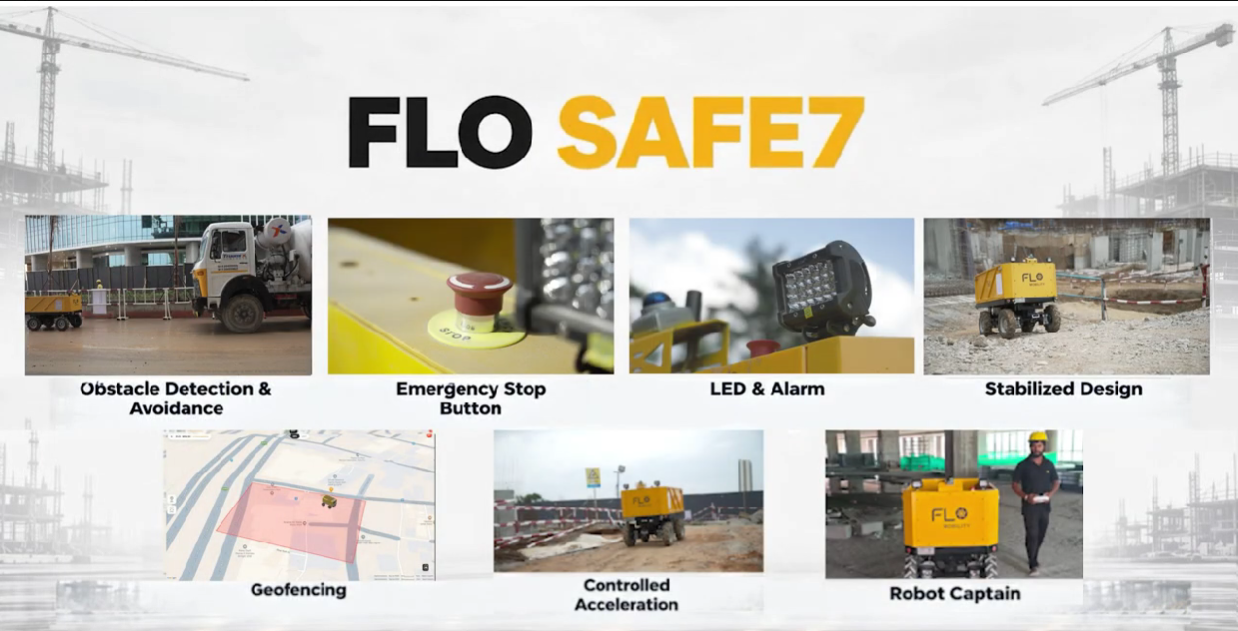
1. Obstacle Detection and Avoidance
Seeing an obstacle means understanding the risk.
A construction site is rarely empty. There are always people and objects that weren’t on the original plan. An obstacle can appear anywhere on a robot’s path or worksite, and it can cause serious safety concerns if the robot isn’t prepared to move around it.
Flo Hauler uses camera-based perception to avoid obstacles and people in its path. Rather than driving around static objects like a warehouse or factory, a construction robot must constantly observe and avoid what it finds in its path. This is because construction sites are unpredictable, and robots must be prepared to operate safely in constantly changing conditions. Autonomy in this setting includes not only knowing where to go, but also knowing what to avoid.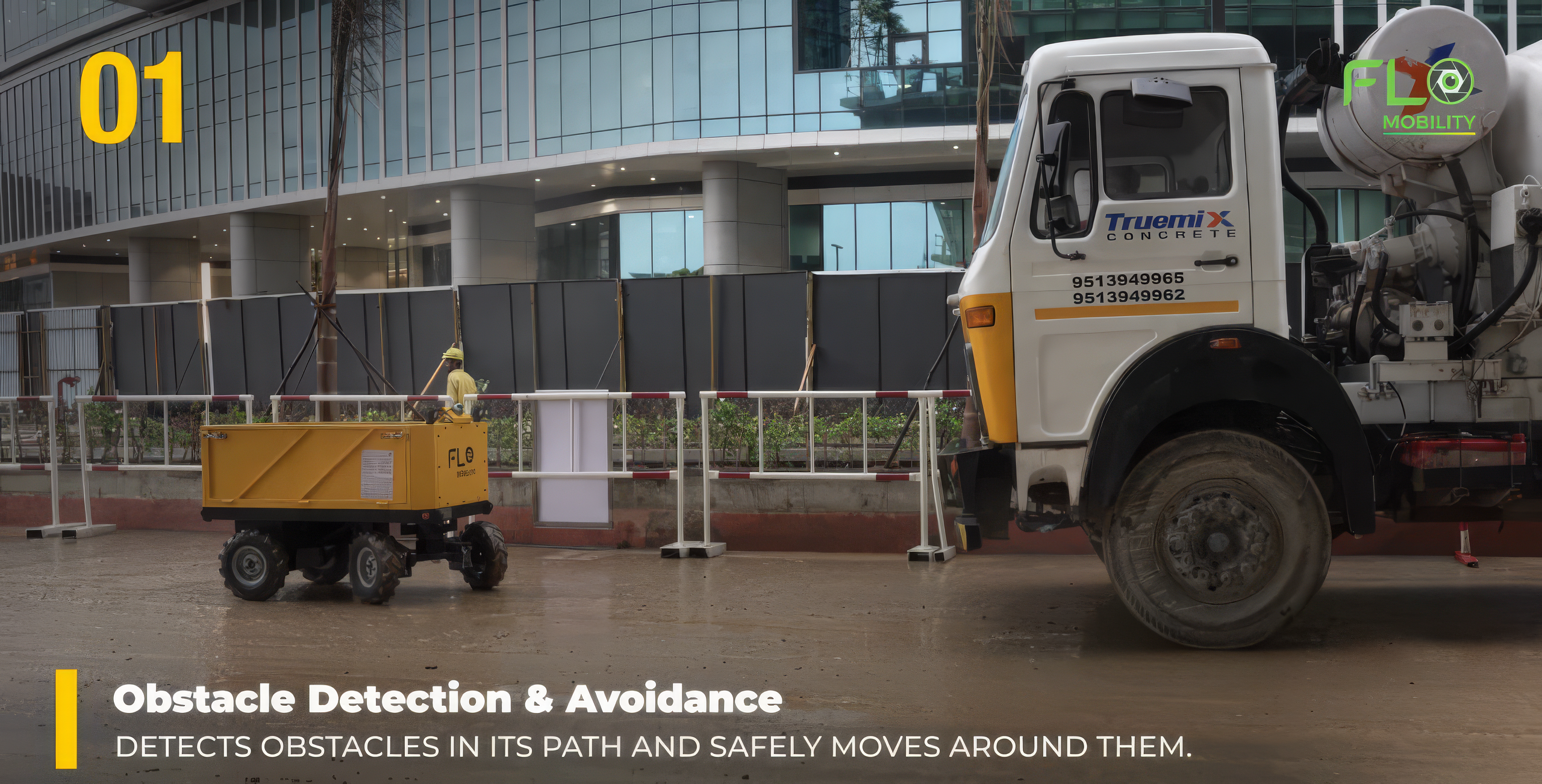
2. Emergency Stop
Sometimes, an emergency stop is exactly what a robot needs. An autonomous robot is designed to navigate and avoid dangers in its path - but there will always be unpredictable obstacles and circumstances that it cannot prepare for. In those instances,
Flo Hauler is equipped with an Emergency Stop feature that allows it to be halted during unsafe or out-of-control situations.
This makes the emergency stop a fundamental part of ensuring robot safety. In many ways, it acts as a failsafe for the robot. However, it is also important to note that it functions as a human override. The goal of an autonomous robot is not to remove human control from the process - rather, it is to understand when the process requires human intervention.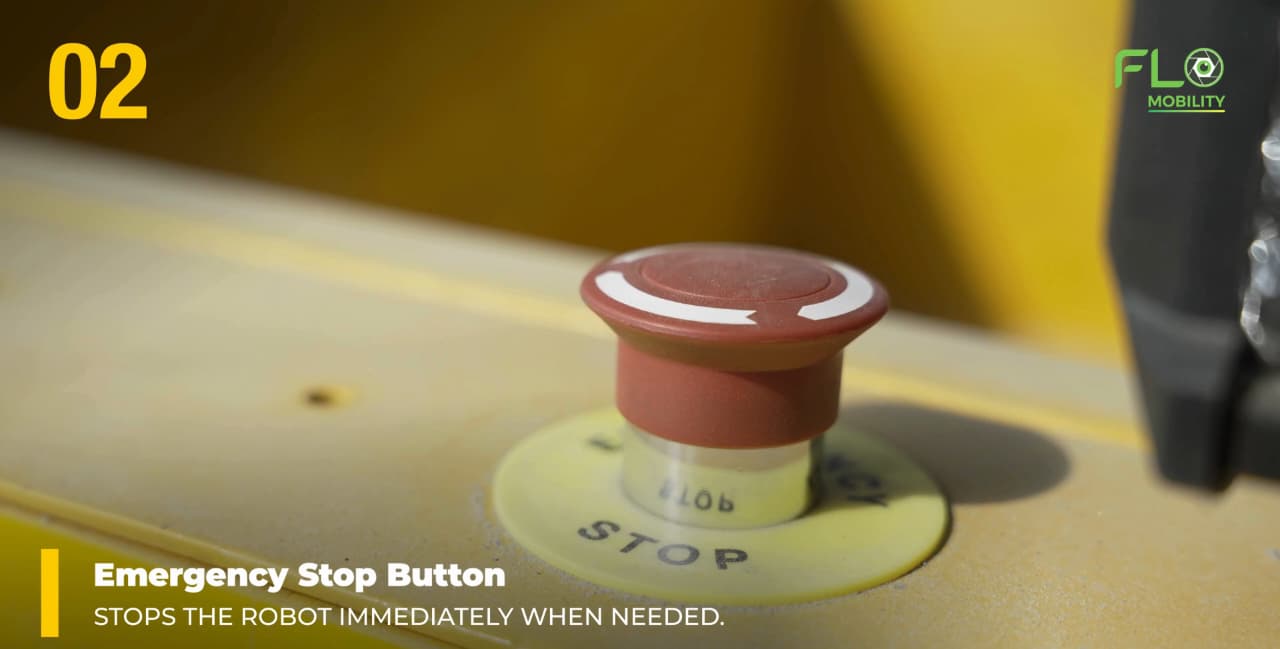
3. LED Lights & Alarm Alerts
A robot that is safe around people needs to be seen by people.
Flo Hauler uses LED lights and alarm alerts as a way to communicate with the people around it.
This is especially critical in busy worksites where humans and robots are operating at the same time - and even more so at night. By using lighting and audible notifications,
Flo Safe7 enables the robot to operate safely in low-visibility conditions, and ensures that people and equipment can see and hear the autonomous machine.
The main goal of these features is to enable visual awareness. By having LED lights and alarms, construction workers and other machines can know the robot is present and operate safely around it.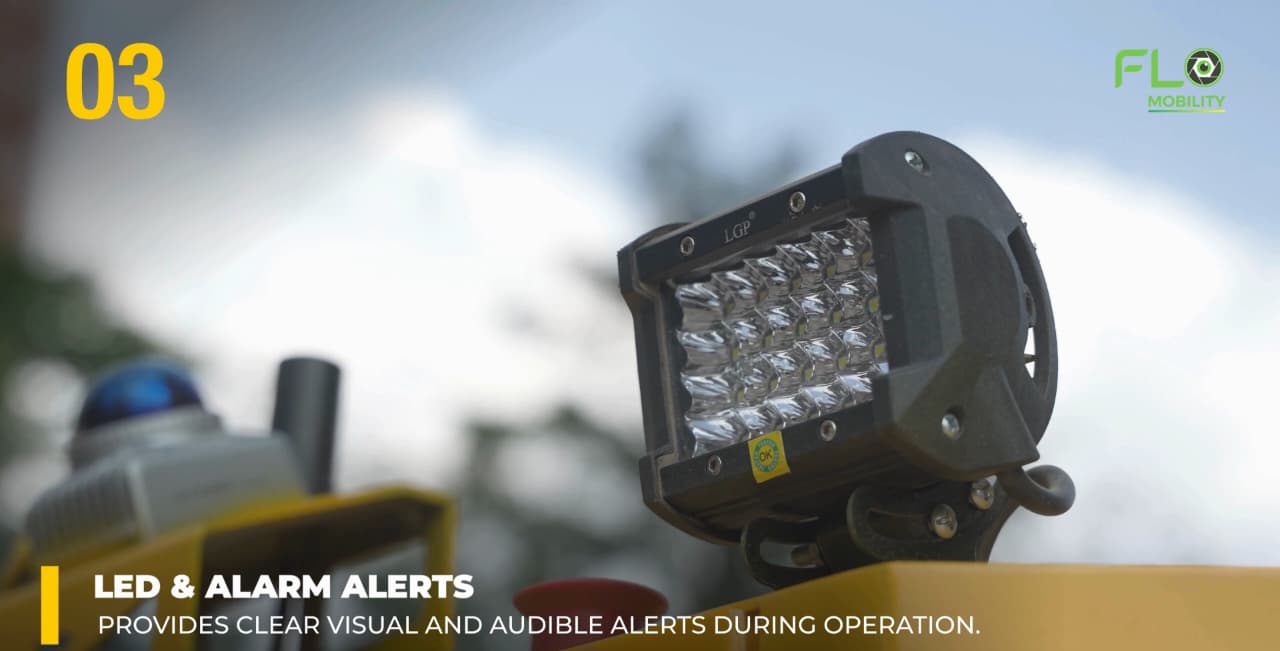
4. Stabilized Design
A stable robot doesn’t tip over.
Construction sites include inclines, declines, unstable ground, and difficult terrain. For a robot that carries materials up and down slopes, stability is a serious concern. The movement of the robot and the additional weight of the materials put additional stress on the robot, which must be counteracted to prevent dangerous tipping.
Flo Hauler includes a stabilized design that helps keep the robot upright when navigating difficult conditions. This way, the robot can maintain its stability even on unstable ground. It ensures that both the robot and the materials it carries remain safe. Flo Safe7 considers the robot’s motion and its relationship to the terrain, and works to prevent any motion that could result in tipping over.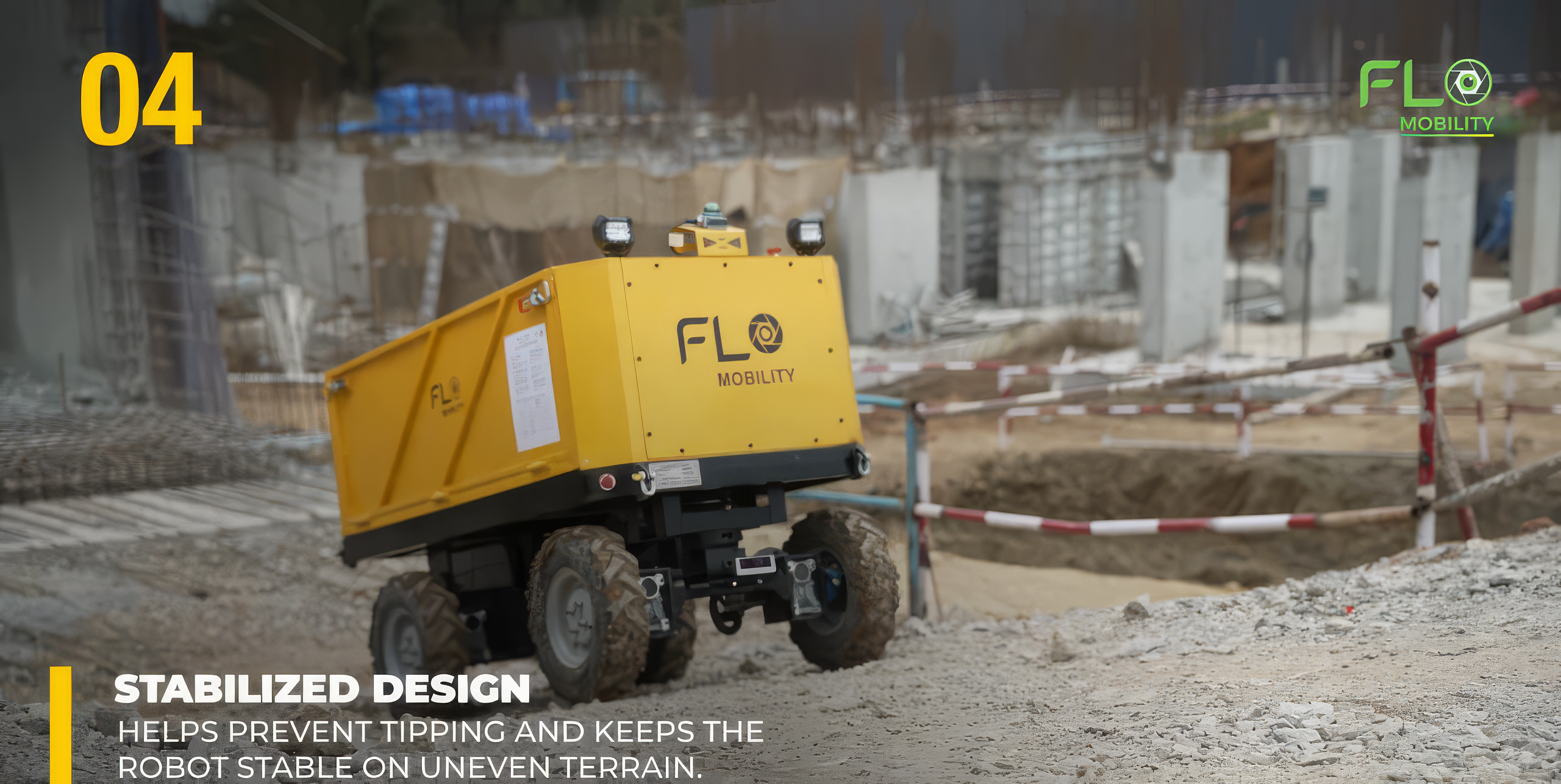
5. Geofencing
Autonomous robots need boundaries.
A worksite can include a variety of different areas that serve different purposes. Not all of these areas are accessible to robots, and some require additional safety precautions to be taken. To keep robots operating in safe areas,
Flo Safe7 uses geofencing to keep the robot within a designated workspace. This allows the robot to avoid dangerous areas and establish virtual boundaries for itself. In effect, geofencing helps define exactly where the robot should and shouldn’t go. If the robot is operating in a complex jobsite with multiple work areas,
it uses geofencing to keep itself inside the area it’s supposed to be in.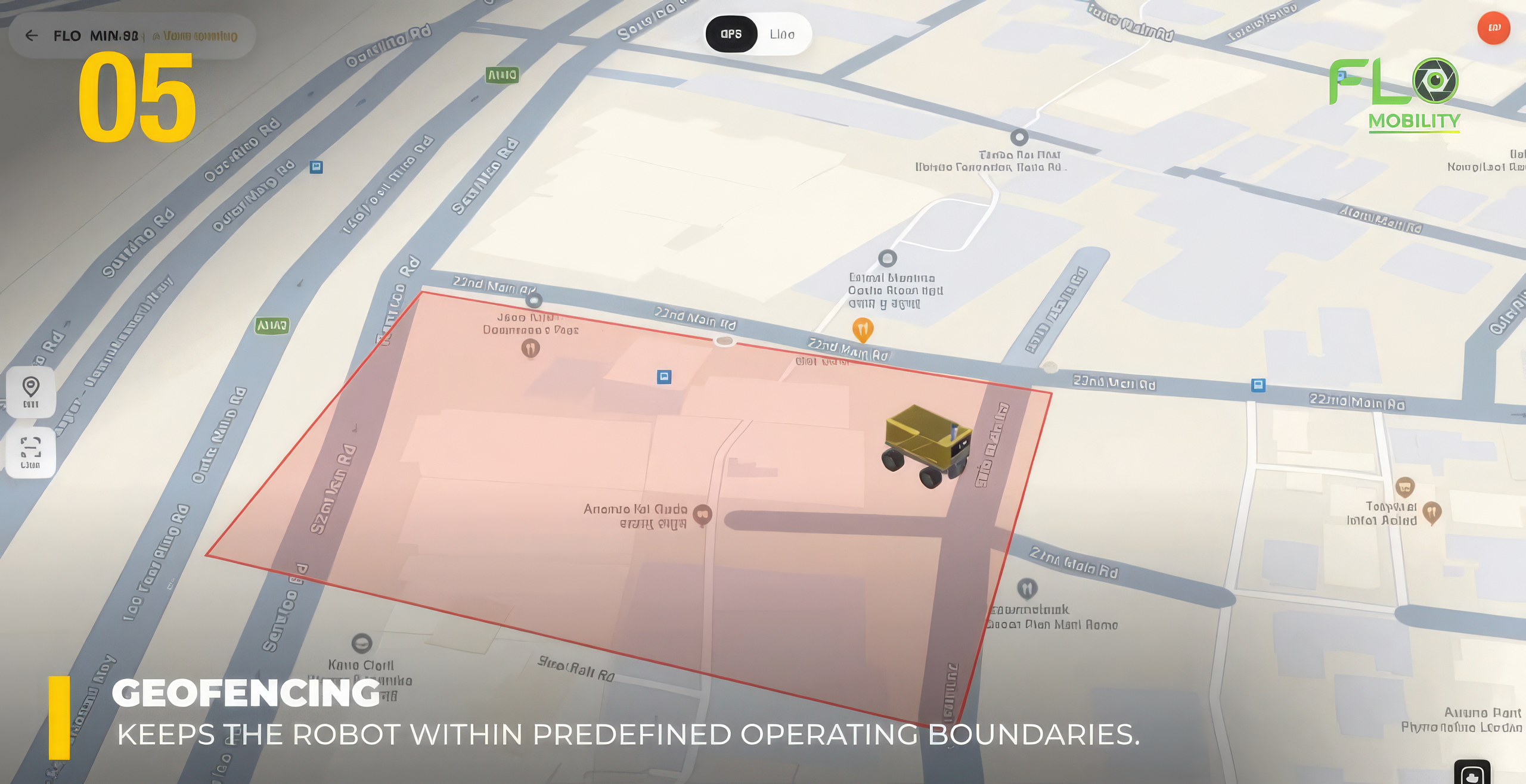
6. Controlled Acceleration
Acceleration is necessary - but it should always be controlled.
Acceleration in an autonomous robot is a crucial factor in making sure it moves safely. A robot that accelerates too quickly puts itself and the people around it in danger - especially on a worksite where other people and machines are present.
Flo Hauler uses controlled acceleration to enable the robot to make steady, safe movements. It eliminates unnecessary acceleration that could lead to instability and keeps the robot operating at a safe, stable pace.
Acceleration is important - but on a worksite, it should remain controlled to ensure the safety of everyone involved.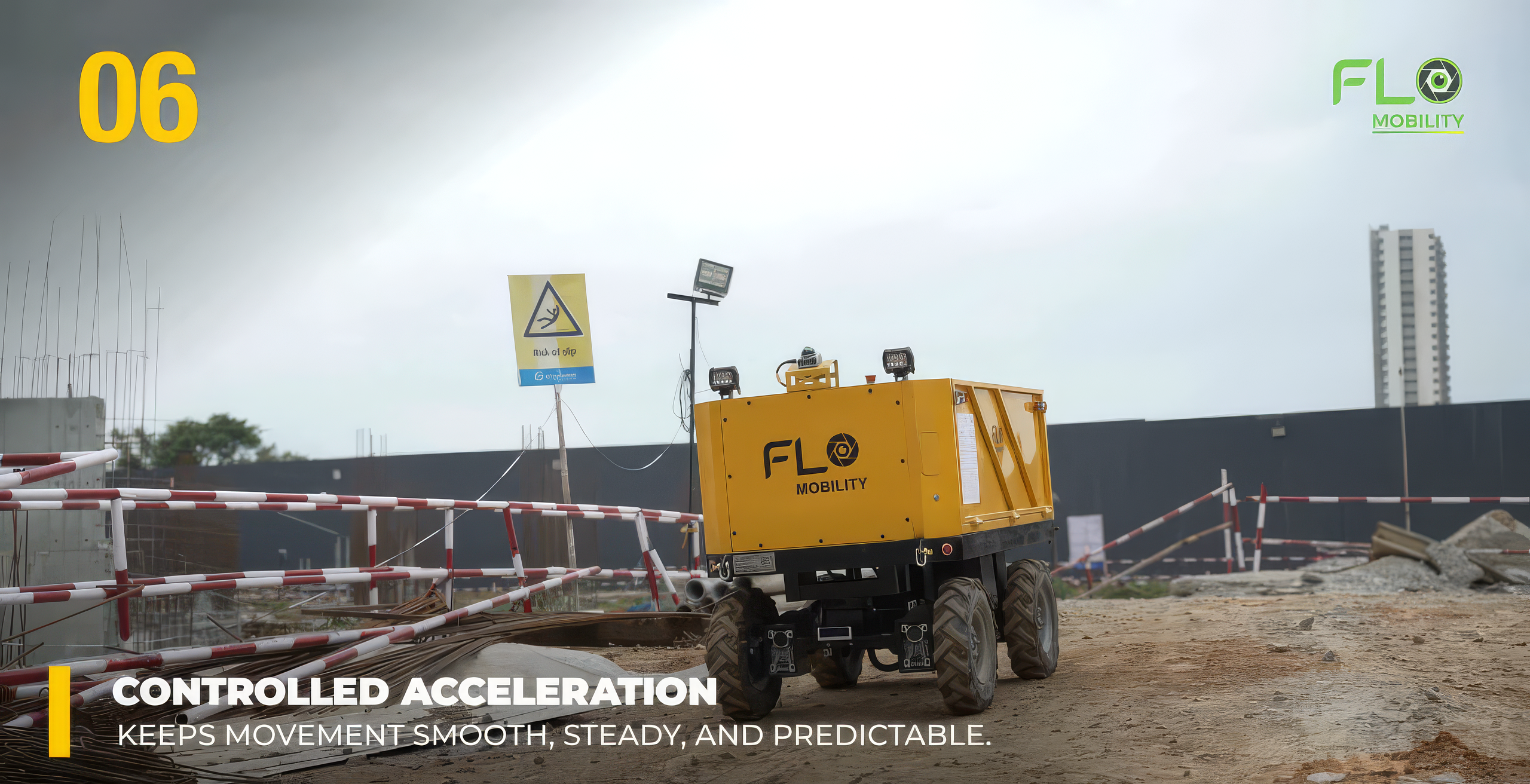
7. Robot Captain
Sometimes, a robot can’t do everything on its own.
This is arguably the most crucial consideration when it comes to autonomous robots on a construction site: no matter how much technology is added to it, there will always be edge cases that need human assistance. This is especially true in unpredictable worksites where robots must navigate around people and other machines.
To address these situations, Flo Safe7 includes a feature known as Robot Captain. Robot Captain acts as a human override in instances where the robot cannot function autonomously.
Robot Captain allows Flo Hauler to receive instruction from a human operator. Rather than treating human input as a weakness, Flo Safe7 uses it as a tool to ensure that the robot remains safe in all conditions. By incorporating human intuition into the process, the robot can handle unique edge cases with greater ease.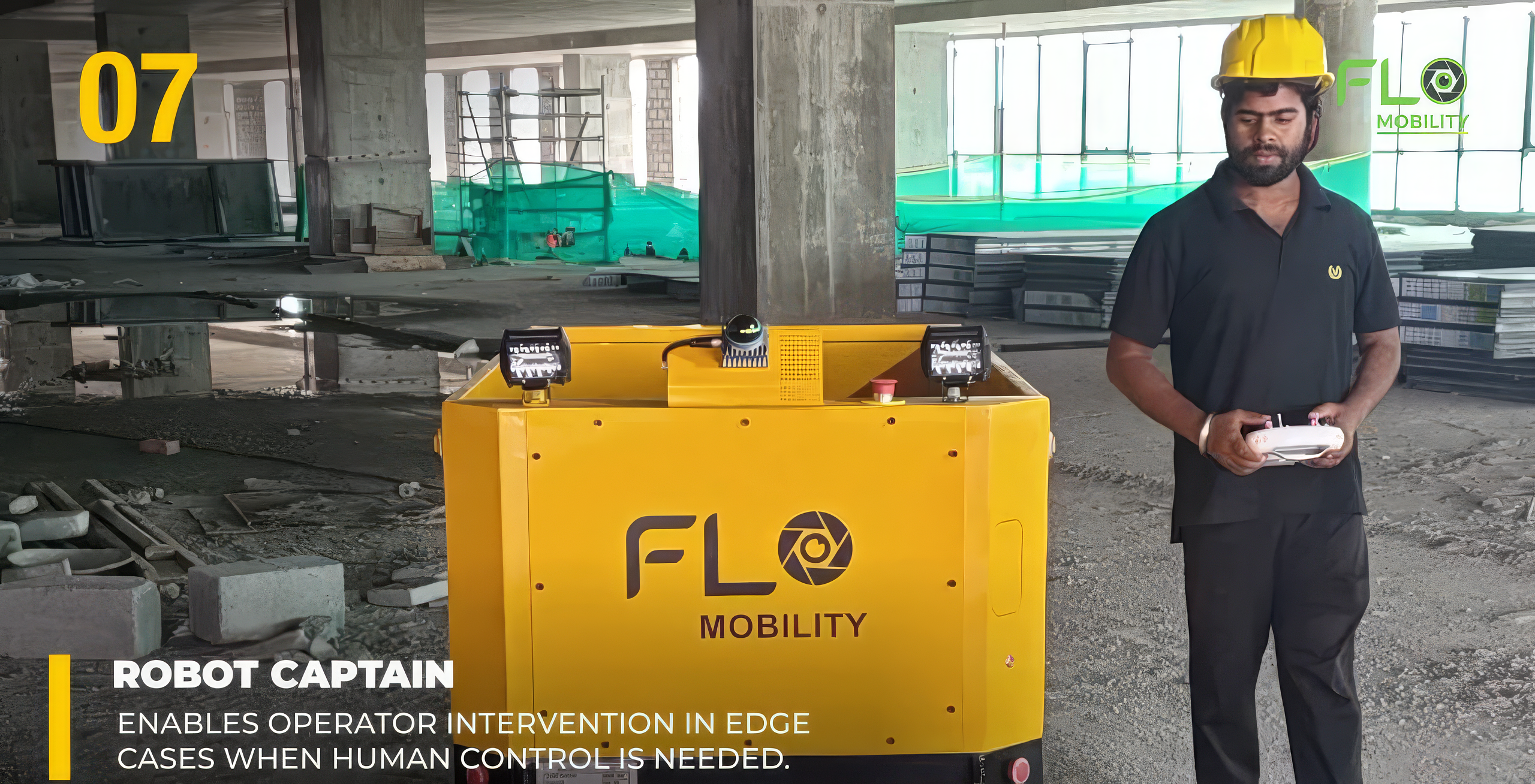
Seven Layers Working Together
Flo Safe7 is not seven separate technologies operating independently of each other. It is a system of seven factors that work together to enable the safe autonomy of the robot.
Perception allows the robot to understand its world. Emergency stops allow it to stop when necessary. Lights and alarms keep people informed of its presence. Stability keeps it from tipping over. Geofencing keeps it in a safe area. Controlled acceleration allows it to move steadily. And robot captain keeps it from getting stuck when it encounters an edge case.
These are the considerations that go into building an autonomous robot for a worksite - not a warehouse or factory. Because unpredictable worksites require greater levels of automation and safety technology, robots operating in these conditions must be able to perceive their environment, establish boundaries, move steadily, maintain stability, and receive human assistance when needed.
Building Autonomy for the Real World
The future of autonomous construction equipment will not be defined by putting robots onto construction sites. Rather, it will be defined by putting robots into the places they need to be to operate safely and effectively.
A worksite can quickly become unpredictable - and that unpredictability must be accounted for when building autonomous technology for the industry.
That is the approach that was used to build the Flo Hauler and the Flo Safe7 autonomous material movement system.
By focusing on the challenges of a construction environment, rather than the conditions of a warehouse or factory, the robot can be made safe for the real world.
Contact us to explore more about Flo Hauler https://flomobility.com/contact