
The Developer Sees Time. The Contractor Sees Margin. Both Are Losing It Here
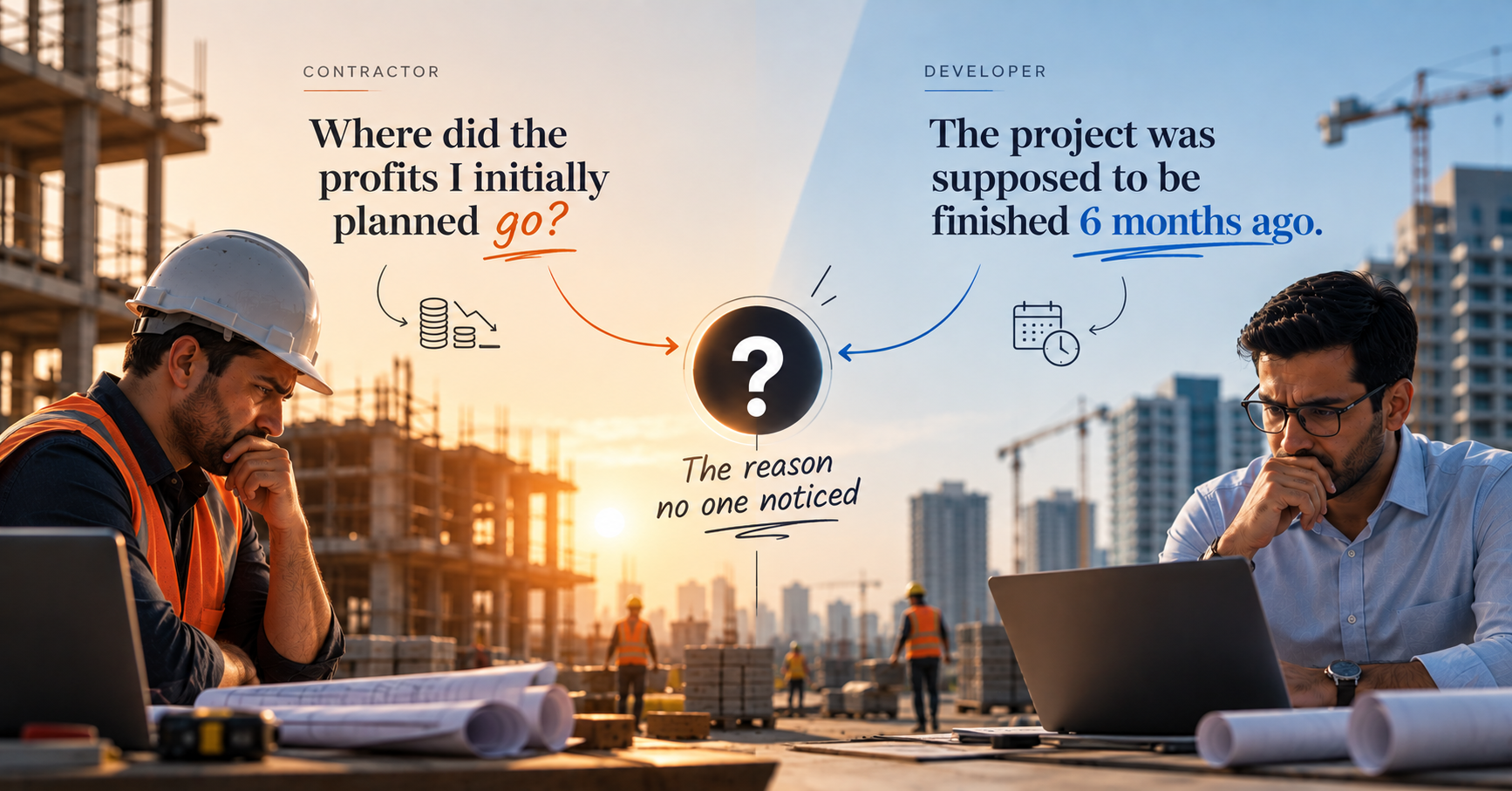
“Why is the project still not completed?” asks the developer, while the contractor is still wondering, “Where did the margin we estimated at the beginning go?”
Two different perspectives, one project, and often, the same underlying pressures.
Construction projects rarely fall behind because of one issue alone. Permits, approvals, rising material costs, equipment downtime and labour shortages can all add pressure, but labour shortages can also create a less visible challenge: inefficient material movement across the site.
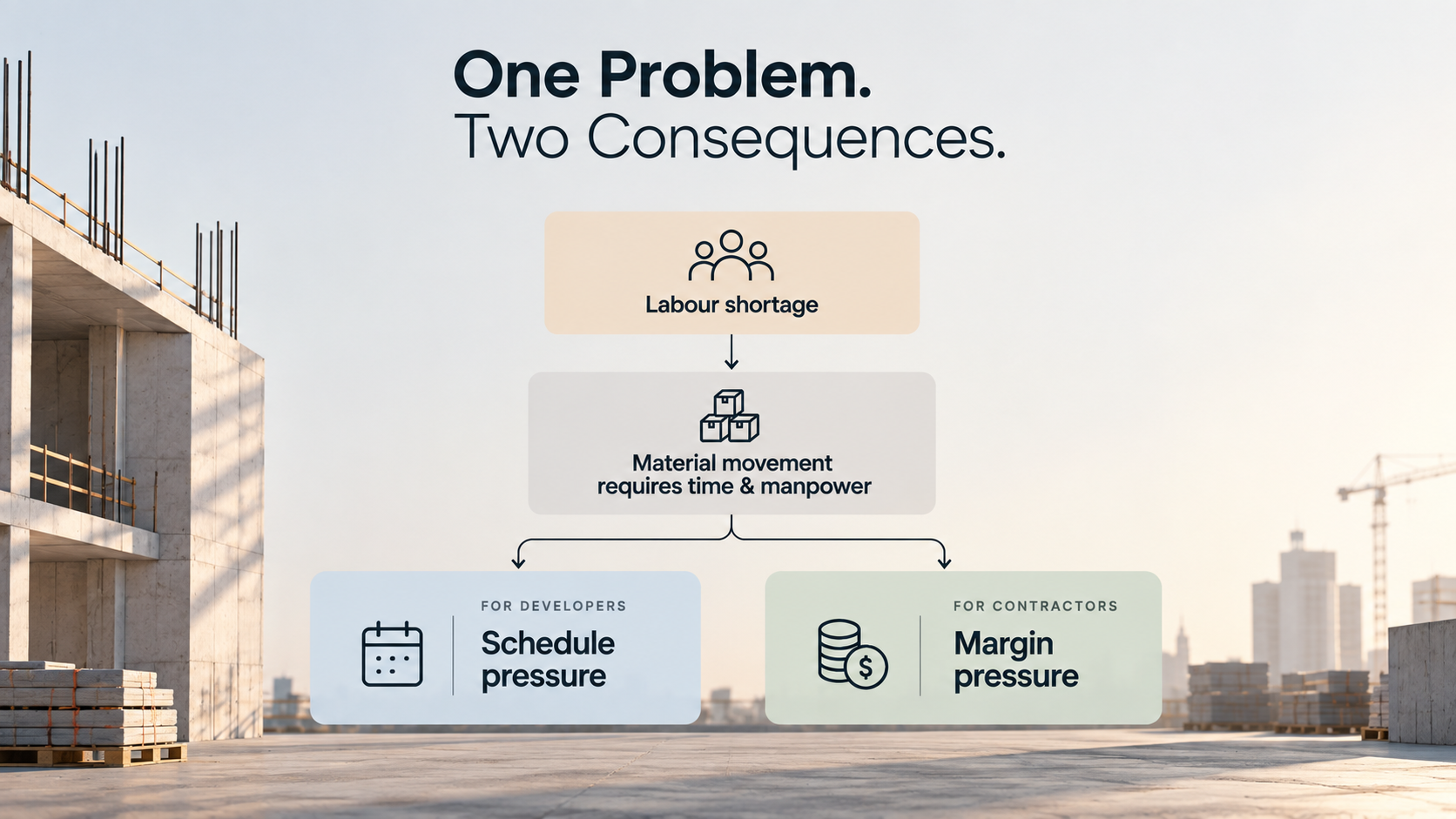
When fewer workers are available, moving materials from one location to another can require more time, manpower and coordination, keeping the available workforce engaged in repetitive activities instead of higher-value work. While each movement may seem insignificant on its own, these inefficiencies can accumulate across crews, floors and work areas.
For developers, it can mean scheduling pressures, and for contractors, the lack of efficiency means margin pressures.
Thus, the issue is not only about labor shortages but also about how efficiently we use the labor force available to us.
That is where material movement deserves a closer look.
Where Labour Is Scarce, Every Movement Counts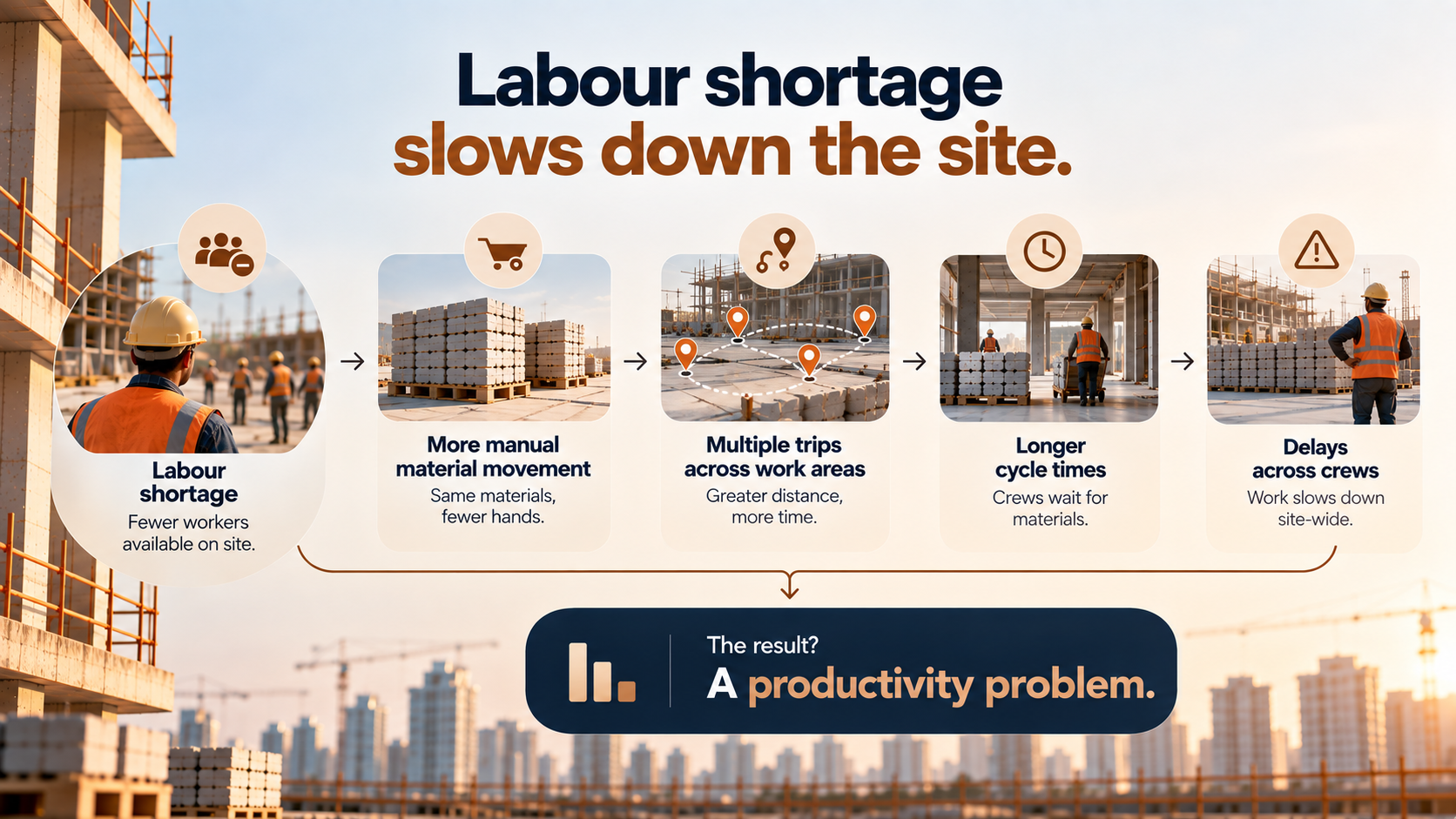
Material has to move on every construction site. It needs to be unloaded, transported, stored, and eventually delivered closer to where it is needed. When these processes rely primarily on manual labour, they require labour, time and coordination at every stage.
Individually, these activities may not seem significant. A worker may spend 15 minutes moving material, a crew may wait for a delivery, or material may be stored temporarily and moved again later. But 15 minutes does not always remain 15 minutes.
When the same 15-minute delays are repeated across multiple trips, floors, work areas and crews, the lost time starts to accumulate. What began as a few minutes here and there can turn into hours of lost productive time and eventually a visible delay in the project schedule.
That is where a routine site activity can become a real productivity challenge-not because material movement is unnecessary, but because the time and labour involved in repeated movement can add up significantly.
McKinsey reports that 98% of megaprojects experienced cost overruns of more than 30%, while 77% were at least 40% late.
There are many reasons behind these outcomes. Material movement is certainly not the only one.
But it is one area where labour availability, time and productivity intersect.
One Bottleneck. Two Different Consequences.

Material movement sits at the centre of two very different priorities on a construction site.
For developers, when material doesn't reach the workface when needed, crews may wait, activities can start later, and the impact can carry into subsequent tasks.
A few minutes may not seem significant, but repeated across multiple crews, work areas and days, these delays can gradually consume the schedule buffer and put pressure on project completion timelines.
For contractors, the same inefficiency affects the economics of the site. When material takes longer to move, workers, supervisors and equipment may remain engaged for longer to achieve the planned output.
The resulting additional labour hours, equipment utilisation and extended site operations can gradually put pressure on already-tight project margins.
Material movement may look like a small operational activity, but when it is repeated at scale, its impact doesn't stay small.
For the developer, it can contribute to schedule pressure.
For the contractor, it can contribute to margin pressure.
Different priorities. The same problem.
And when labour availability is already under pressure, the question becomes simple:
How can we reduce the manual effort and time required to keep material moving?
The Opportunity Isn't Simply More Labour
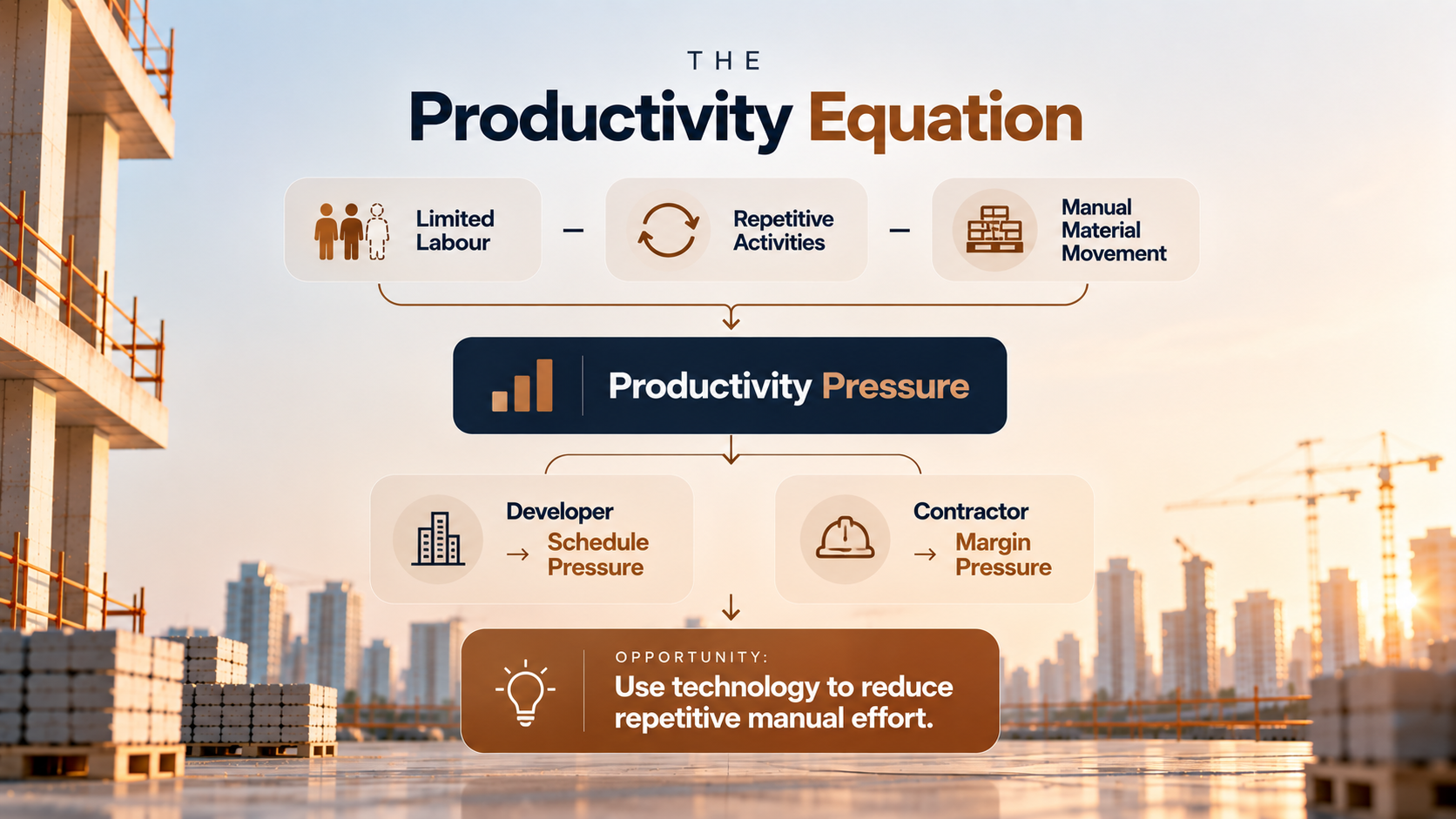
Labour shortages make this question even more relevant.
If adding more people isn't always a practical answer, another approach is to examine which repetitive activities can be supported by technology.
Material movement is one such area.
Automation doesn't mean removing people from construction.
It means asking where technology can take on repetitive, physically demanding movement so that the available workforce can be used more effectively elsewhere.
For developers, improving this part of the workflow can help address one contributor to schedule pressure.
For contractors, it can help make better use of available manpower and reduce some of the costs associated with extended operations.
The Bigger Picture
Labour shortages do more than limit the number of people available on a construction site. They can also make essential activities like material movement less efficient, as the available workforce has to manage more tasks with limited time and resources.
The impact of slower or more manual material movement might have effects beyond the immediate area of concern. Delay on workers, tasks, work areas, and floors may transform small inefficiencies into one of the many reasons for a bottleneck impacting contractors and developers.
The conclusion one can come to is straightforward: Productivity is mostly about the repeated processes necessary for carrying out a project. Realizing where labor/time is spent and in which areas technology can help is crucial for enhancing work processes on building sites.
There is much more to explore when it comes to construction technology, productivity, automation and the future of the industry.
Subscribe to Flo Mobility Insights for industry perspectives, Flo updates, technology learnings and more conversations around how construction is evolving. https://flomobility-newsletter.beehiiv.com/