
The Hidden Cost of 200-Meter Material Routes in Commercial Construction
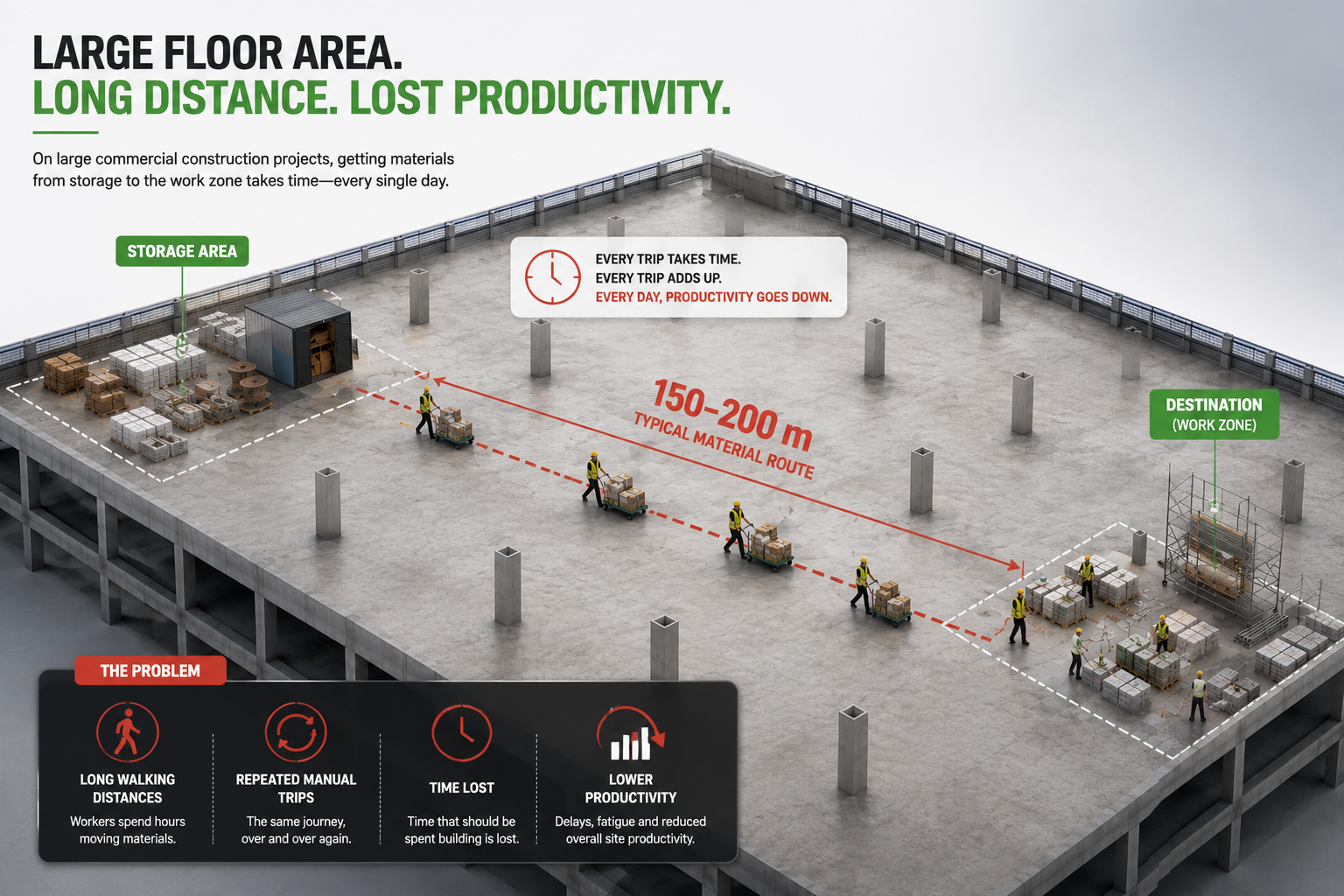
The material is already on the floor. The work is ready to begin. So why is someone still spending time moving it 200 metres across the site?
On large commercial construction projects, getting materials into the building is only part of the logistics challenge.
The bigger challenge can begin after they arrive.
A storage area may sit on one side of a large floor plate, while the team that needs the material is working on the other. Tiles, gypsum boards, cable trays, electrical materials, pipes and other construction supplies still have to travel from storage to the actual work zone.
One trip may take only a few minutes.
But when that journey is repeated throughout the day, across multiple floors and multiple work zones, the distance adds up.
And so does the manpower required to cover it.
At Flo Mobility, we looked closely at this often-overlooked part of commercial construction: the last stretch of material movement between storage and point of use.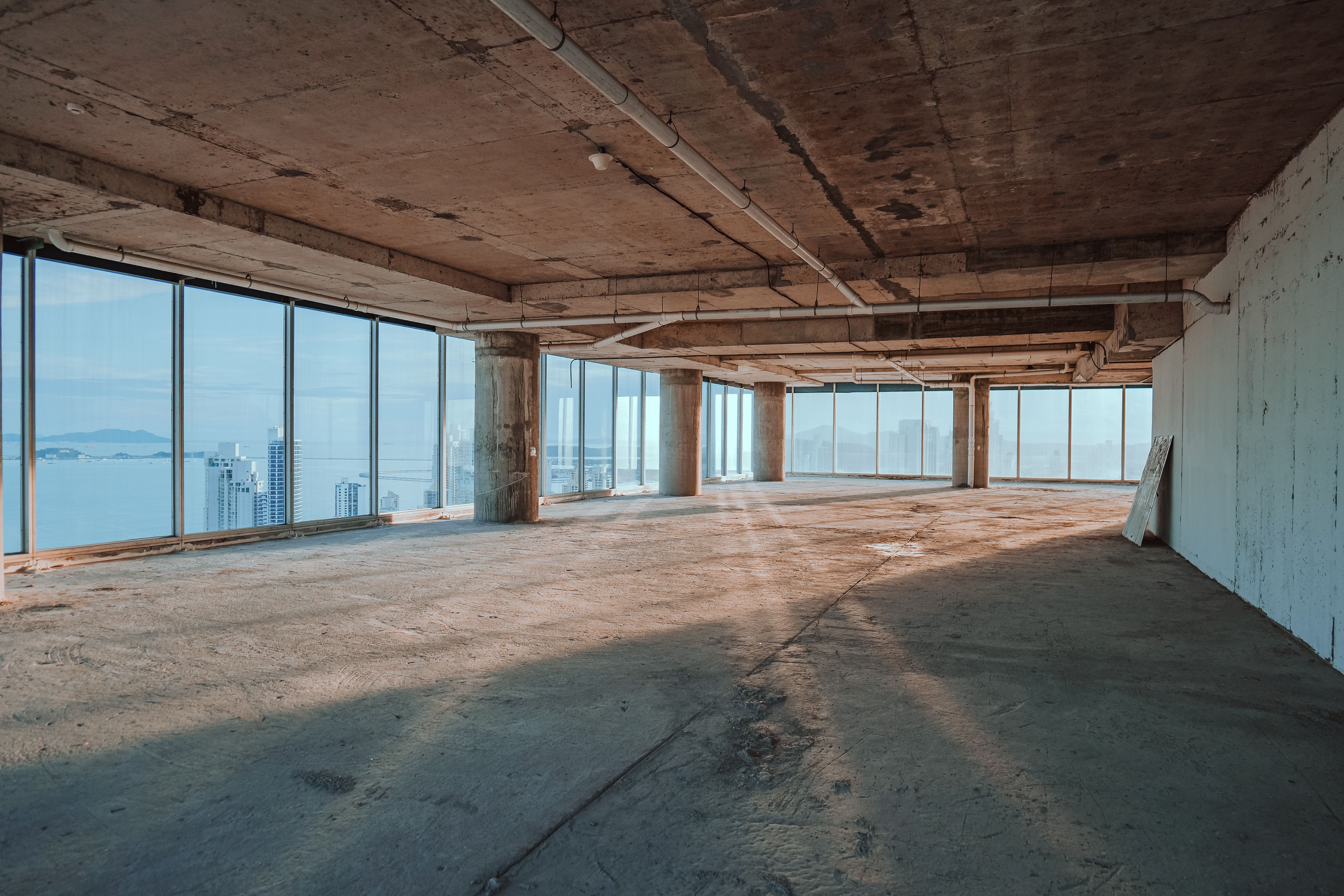
The Problem Isn't Getting Material to the Floor. It's Getting It to the Work Zone.
Large commercial buildings are built around large floor plates.
Whether it is an office, hospital, retail facility, data centre or other commercial development, multiple teams can be working across different sections of the same floor at the same time.
That creates a very different material movement challenge from simply getting a load into the building.
A pallet of tiles can be delivered to the designated storage area, but the tiling team may be working hundreds of metres away.
Electrical materials may be stored at one end of the floor while the electrical team is working at another.
Gypsum boards, pipes and cable trays face the same challenge.
The material has reached the building.
But it hasn't reached the person who needs it.
150–200 Metres Doesn't Sound Like Much. Until You Repeat It.
On a large commercial floor, a typical material route can stretch 150–200 metres from the storage area to the work zone.
Now imagine covering that distance repeatedly.
A worker moves a load from storage.
The load reaches the destination.
The worker returns.
Another load is ready.
The journey starts again.
And again.
The challenge isn't necessarily the distance of a single trip. It is the repetition of the same trip throughout the project.
Over time, these journeys consume manpower that could potentially be allocated to other site activities.
This is where a seemingly simple material-handling task becomes a construction productivity issue.
The Hidden Cost of Manual Material Movement
Manual material transportation is a necessary part of construction. But on large commercial projects, it can become a continuous activity.
Every material movement requires someone to be available to load, transport and unload the material. When demand increases, the number of trips increases with it.
That creates four connected challenges:
Long walking and transportation distances mean workers spend significant time moving between storage and work zones.
Repeated manual trips mean the same routes are covered over and over throughout the project.
Manpower gets tied up in transportation, even when those resources could potentially support other site activities.
And material distribution can become slower, particularly when several work zones need supplies at the same time.
None of these issues necessarily appears as a major project delay.
They accumulate quietly.
A few minutes per trip becomes hours across a shift. Hours become days across a project.
The floor plan stays the same. But the amount of movement keeps growing.
What If the Material Could Move Itself?
This was the question we started exploring at Flo Mobility.
Instead of relying entirely on manual transportation across large floor areas, could repetitive material movement be automated?
The answer led us to Flo Hauler.
Flo Hauler is an autonomous material movement robot designed to transport construction supplies across the site.
The concept is straightforward:
Storage → Flo Hauler → Work Zone
Instead of assigning manpower to repeatedly cover the same route, the robot can take over the transportation journey.
The objective isn't to remove people from the construction process.
It is to reduce the amount of manpower required for repetitive transportation and make workforce allocation more efficient.
From Storage Area to Point of Use
The real value of autonomous material movement becomes clear when you look at the entire workflow.
In a conventional setup, a material load reaches the storage area and a worker is required to move it towards the destination. Once delivered, the worker returns to collect the next load.
With an autonomous material movement robot, that repetitive transportation can become part of an automated workflow.
Flo Hauler can transport materials such as:
Tiles
Gypsum boards
Cable trays
Electrical materials
Pipes
Construction supplies and other loads
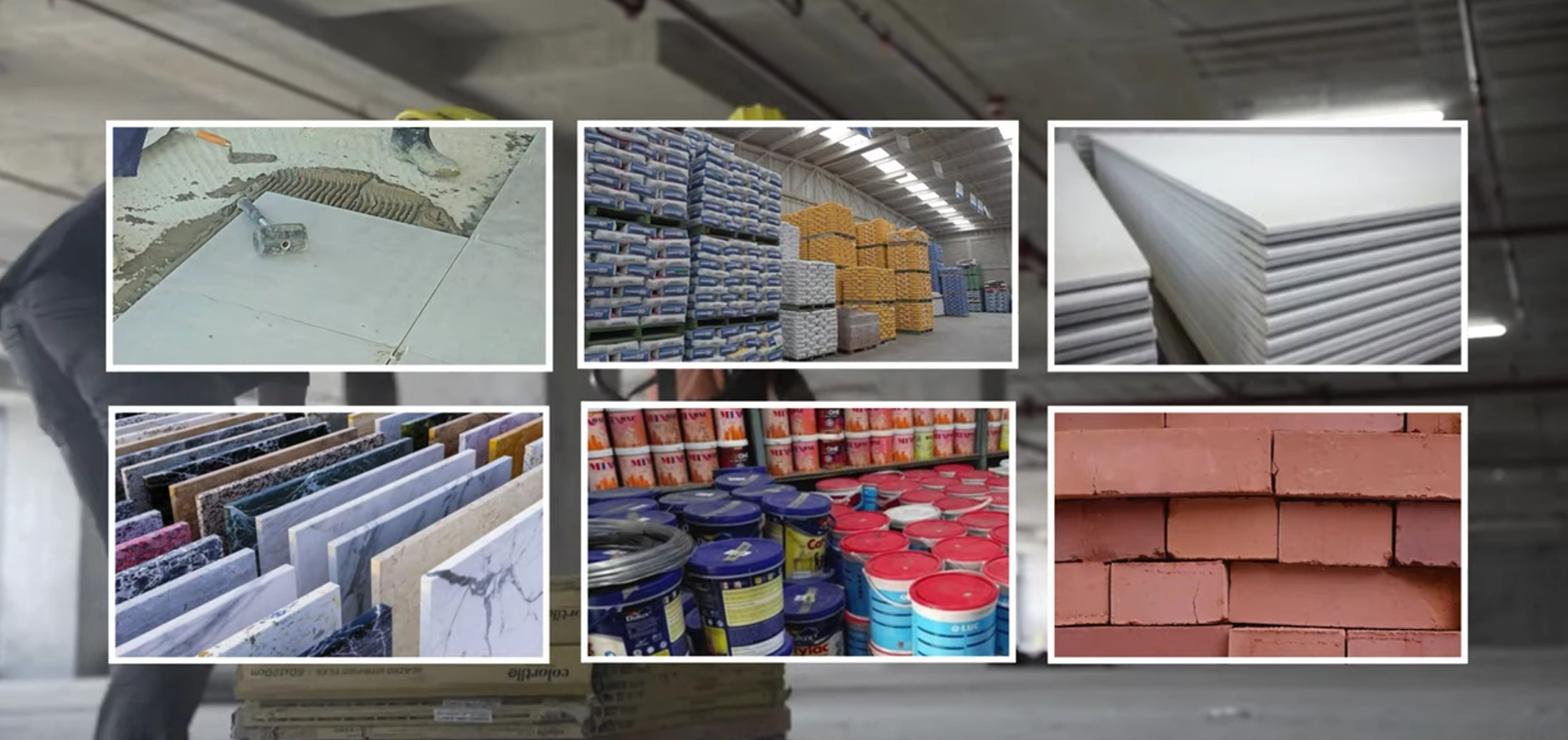
The robot handles the repetitive movement across the floor while site teams can allocate their available manpower to other activities where support is needed.
The distance doesn't disappear. The dependence on manual movement does.
What We Saw Across Commercial Deployments
The impact becomes significant when material movement is repeated at scale.
Across live commercial deployments, Flo Mobility has achieved:
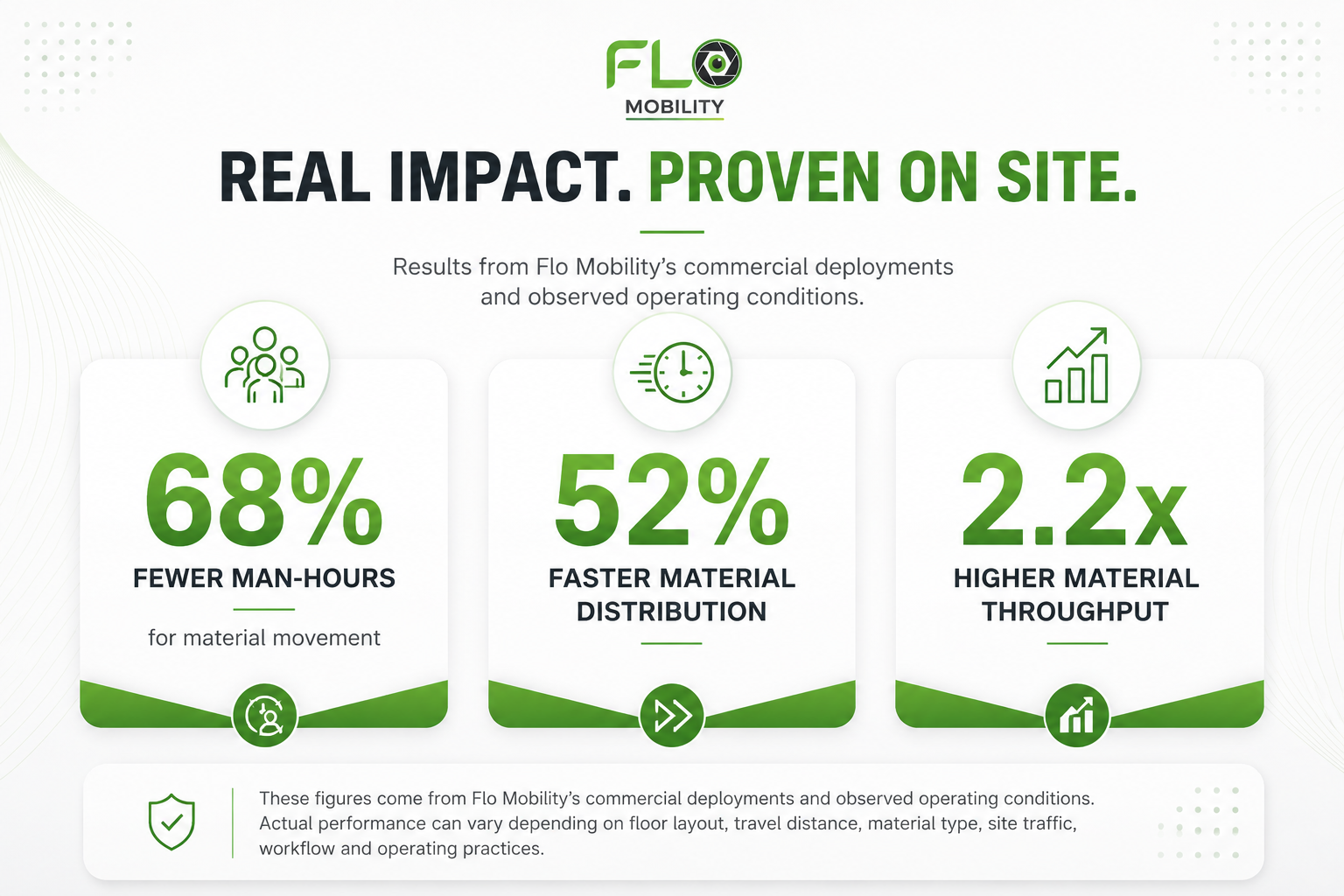
But the underlying insight is clear:
Automating repetitive transportation can help construction teams move more material while using manpower more efficiently.
Better Manpower Allocation, Not Workforce Replacement
Construction automation is sometimes framed around replacing manual labour.
That's not the objective here.
Material movement still needs to happen. The question is who-or what-is best suited to perform the repetitive transportation.
When an autonomous robot handles repeated movement across a large floor, the manpower previously dedicated to those trips can potentially be redirected to other site requirements.
That could include supporting different work zones, assisting other teams, material preparation, housekeeping, site logistics or other operational activities.
The goal is to make the workforce more flexible.
Let the robot handle repetitive movement. Let your workforce focus on where it is needed most.
Why Commercial Construction Is a Natural Fit for Autonomous Material Movement
Large floor plates create a particularly strong opportunity for construction automation.
The larger the floor, the greater the potential distance between storage and work zones. And as more trades operate simultaneously, the number of material movements increases.
This creates a continuous logistics challenge.
Today's material may need to move to one section of the floor.
Tomorrow, another work zone may become active.
The material routes change, but the need for transportation remains.
An autonomous electric wheelbarrow or material movement robot can help address this repetitive requirement without requiring the entire construction workflow to change.
That makes autonomous material movement a practical addition to the broader construction site automation ecosystem.
The Future of Construction Logistics Is About Moving Smarter
Construction productivity isn't only about how quickly something gets installed.
It is also about everything that happens before installation begins.
Material needs to arrive.
It needs to be stored.
It needs to be distributed.
And ultimately, it needs to reach the exact point where it will be used.
Every unnecessary trip consumes time and manpower.
On large commercial projects, those trips can add up quickly.
At Flo Mobility, we believe autonomous material movement can help construction teams rethink this part of the workflow.
Flo Hauler is designed to take on repetitive material transportation across construction sites, helping reduce manual handling, improve material distribution and enable better utilisation of available manpower.
The Distance Is the Problem. Automation Can Be the Solution.
Large commercial floor plans aren't going away.
Projects will continue to have expansive work areas, multiple trades and long routes between storage and installation zones.
The opportunity is to make those distances less dependent on manual transportation.
Because the real question isn't how big the floor is.
It's how many times your workforce has to cross it.
Is Your Project Spending Too Much Manpower on Material Movement?
If your commercial construction project involves large floor plates, long material routes and repeated manual transportation, there may be an opportunity to rethink how materials move across the site.
Talk to Flo Mobility about autonomous material movement for your next commercial construction project. https://flomobility.com/contact